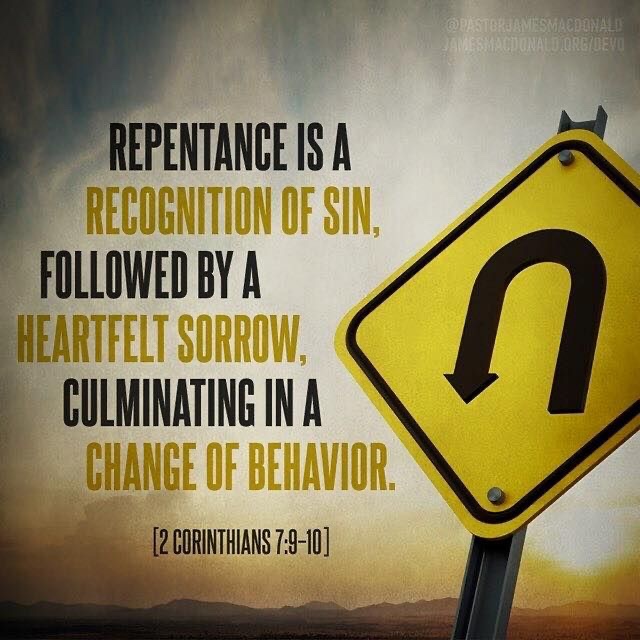
Godly Sorrow: The Distress that Drives us to God

Godly Sorrow: The Distress that Drives us to God

Godly sorrow brings repentance that leads to salvation and leaves no regret, but worldly sorrow brings death. [2 Corinthians 7:10]

I will never forget the year I outlawed the use of the word, “sorry” in my sixth-grade classroom. For some reason, the majority of my students thought that simply saying the word, “sorry” gave them a free pass from any consequence or any need to change their behavior. Saying, “sorry” was the magic word that would stop any authority figure from holding them accountable for their slip-ups and misdeeds and would relieve any feelings of badness and sadness they felt, especially when they were “sorry” about being caught. “Sorry” became the word that could hide them from judgment for breaking the rules, but their version of “sorry” had no power to change their hearts or help them recognize the wounds in relationships they were causing.

So, to move my precious charges from a position of self-centeredness and complete self-absorption, I outlawed the word “sorry” and gave them other phrases to use instead. All year we worked on empathy for others, so that saying, “I have hurt you,” and “This offense is my responsibility,” had a real impact on their hearts. We worked on forgiving and the giving of grace by saying to a classmate dealing with a misstep, “That’s okay, you are still a good person.”

I borrowed a page from the Apostle Paul’s second letter to the Corinthians as I asked God for help with this tough-hearted little crew He had given me to love. Paul’s first letter to the Corinthians had really scorched their hides, demanding accountability for the sin and divisions that had turned their church into a shipwreck. Then, worrying that he had been too harsh, Paul wrote in his second letter to them, that he wanted them to feel the Godly sorrow that would lead to real change.

He wanted them to recognize how truly destructive this current sin-cycle was to their relationship with God, with one another, and within themselves. He didn’t want them to concentrate on outward behavior, but on letting the grace of God and His love penetrate their hearts. Paul wanted the Corinthians to love well, the way Jesus loves, and that meant measuring their behavior by how well they were maintaining loving, healthy relationships. He didn’t want their lives defined by hiding, regret, or being driven away from God and each other by an angry, condemning conscience.

Paul’s Holy Spirit-inspired approach inspired me to help my students move from trying harder to be good and nice and less snarky, to training their hearts to value loving well. Instead of making vows to do better and throwing out a quick, “sorry,” we worked on creating a safe environment where behavior could be evaluated without threat and tools for true change could be discovered and used. I have to admit, that the more deeply we explored this approach, the more of my own “me-sickness” surfaced. God lovingly and gracefully dealt with me, the biggest sinner in that classroom!

What about you? Would you be interested in living a life that leaves no regret, a life defined by true change and healing? Do you want out of the living death of a continuous sin cycle? Embracing Godly sorrow, rather than worldly sorrow is the key. You and I can pray for God to help us turn our perspectives outward so that we have the big picture our sin and mess are creating. The distress we feel at getting caught can be changed to a distress that drives us to a loving Father who is ready to forgive, grant us a do-over, and over time, equip us to love better. We can pray for a more sensitive heart that cares deeplywhen we hurt God, hurt others, and hurt ourselves. That is Godly sorrow. What would it look like in your life?

BY: Stephanie Murillo

For Further Study
2 Corinthians 7: 8-10
2 Samuel 12:13
1 Kings 8:47-50
Matthew 21:32
Matthew 26:75
2 Timothy 2:25-26


Goodness Without Perfection

Goodness Without Perfection

And God said, “Let there be light,” and there was light. And God saw that the light was good. And God separated the light from the darkness. God called the light Day, and the darkness he called Night. And there was evening and there was morning, the first day. Genesis 1:3-5

How in the world do you separate light from darkness? Can you even imagine a time where they weren’t separate? Perhaps it was light for a moment and then dark the next, like a strobe light. Or was it foggy all the time in a half light half dark mix. However the two were muddled up, God was able to separate light from darkness.

BUT… God still knew the light was good before he straightened it out. This tells me something important about the character of God. Things doesn’t have to be perfect to be good. Which is a really hard concept for humans (like me) to understand.

  • You can be beautiful and a work in progress.
  • Don’t confuse a bad day for a bad life.
  • One bite of cake doesn’t ruin a healthy lifestyle.
  • Something can be awesome and need to change.

These are all inspirational thoughts we try to remember because human brains don’t like dichotomy. Nope. Not one bit. But you absolutely can have good kids who rip up library books, a good day in which you broke your foot or a loving spouse who can’t remember to bring you flowers on your birthday. It can be good before it’s perfect.

What is God trying to tell is right here in the very first thing he does? YOU don’t have to be perfect for God to love you. You don’t. God is okay with things that are good but mixed up. Thats why Jesus came. Is there work to be done? Sure, but that’s what life is for. So keep working on separating the light from the darkness in your life. Note to self: you are not God so it’ll probably take more than one day. But you don’t have to be perfect for God to love you.

P.S. Why did I include a picture of my littlest pup? No it wasn’t just clickbait. This little guy is amazing. He is good. He is just exactly who he should be… except… he loves to pee in the house. Oh he knows how to go outside. He is put out all the time. But he takes great delight in peeing in sneaky spots. Is this trait annoying? Do I wish he stopped. Of course. But he’s no less of a good dog who we love with all our hearts. I think God feels like this about us too.

Creative Conflict

Creative Conflict

How do you handle conflict? Do you avoid it at all costs? See it as demoralizing and fearful? Or might you perceive conflict as an opportunity for growth and a strengthening of bonds? The Bible has a compelling story of creative conflict management in 2 Samuel 17. Take a moment to read the story of two hot-heads, David and Nabal, and one creative thinker, negotiator and communicator named Abigail.

When Nabal is asked by King David’s servants for a hand-out, he reacts by insulting the king, refusing to meet their desperate need for food. David does not stop to think, pray, or assess the situation. He, like Nabal, puts his foot on the emotional gas and threatens to leave no son of his alive because of this drunken fool’s refusal. When Abigail learns that death now threatens her family, she calmly stays in touch with her feelings and carefully considers how to respond. Abigail empathizes with David’s plight, staying calm, non-defensive and respectful when she takes food to David.

She faces the conflict head-on, but respectfully seeks a win-win for both her family and for David, refusing to be paralyzed by anger or fear. Then this resourceful woman communicates to David that the blood-shed he is contemplating is going to hurt his relationship with God then asks the king to forgive her husband and to hold nothing against her. Abigail boldly advocates for herself asking David to remember her when the conflict is resolved.

You and I can benefit from Abigail’s conflict-resolutions skills if we are willing to ask the Holy Spirit to help us put the following strategies into practice:

  1. Let go of the need to win or be declared right. We can effectively handle conflict when our goal is the restoration of relationship, not winning. We need to be reminded that God loves us whether we are top dog or not.
  2. Let go of the past. Focus on the present, not past grudges, so that what can be done in the here-and-now isn’t lost in chaotic memories.
  3. Let go of the need for revenge. We can resolve conflict if we release the urge to punish and if we are willing renounce the following: dwelling on the incident, bringing it up again, re-hashing the incident with others, and letting the incident stand between us and others.
  4. Let go and disengage when a discussion is not fruitful. We can often try again especially after learning better communication skills and seeking the help of professionals in this area.
  5. Let go of the need to handle conflict without help. God is happy to give us wisdom and discernment when we ask Him for help in hard-to-have conversations. We can ask God for a strengthening of our character for stronger conflict resolution skills and for safe others to guide us.

Any conflict has the potential to teach us about ourselves and deepen our understanding and empathy for others. As you and I are willing to work with God and safe others on our own issues, we will learn to respectfully approach others when conflicts arise. God’s desire is always the re-creation of deep and healthy connections in our relationships.

For further reading:

  • Ephesians 4:32
  • Matthew 6:14
  • Proverbs 15:1, 2, 4, 18, 22, 28, 32

BY: Stephanie Murillo

[Art Note: Painting is oil on panel by Sir Peter Paul Rubens entitled The Meeting of David and Abigail circa 1630.]

Name Without Shame

Name Without Shame

Why, my soul, are you downcast? Why so disturbed within me? Put your hope in God, for I will yet praise him, my Savior and my God. [Psalm 42:5 NIV]

Have you ever been ambushed by a tsunami of emotions that threatened to hi-jack the noble, mature, responsible you? Have you ever been a primal scream wrapped in skin? I have to raise both hands here and admit that for years I did not know what to do with the molten lava of feelings I often felt inside.

Happily, Christian teachers are now beginning to acknowledge our need to train, rather than try to manage our emotions honestly and without shame, a development that can bear so much fruit in our hearts and help us connect with our inner lives, with God, and with others.

One of the first skills I began to practice came from our God-given identity as “namers.” God gave Adam and Eve the job of giving names to the flora and fauna around them in the Garden of Eden, and we have been assigning names and labels from that day to this. Naming is a powerful tool, because identifying an emotion, issue, or worry, brings it out of the darkness into the light. What we acknowledge, can now be placed into God’s capable, competent, compassionate hands for healing and change. Naming is often the first step in managing that volcano inside.

In Psalm 42, King David is practicing an emotionally healthy strategy by looking inside himself and trying to name what is troubling him. He is engaging in some fruitful “self-talk” by not only asking this question, but also turning his focus on God as Savior and a giver of grace. Some scholars believe David wrote this when he was fleeing from his own son and could not enter God’s house to worship. In Psalm 42, he honestly names what is defining his life at present: a soul (mind, will, and emotions) drained dry by the tears of betrayal that have poured out day and night.

The pandemic has caused many of us to feel a level of disconnect we have never experienced before, but there is hope! A tidal wave of emotion may sweep over us, but as Charles Spurgeon says, “Grace swims!” So, how do we invite God into our emotional tempest?

  • ASK God for help to put a name to what is driving the storm inside us.
  • POUR out all that is inside to the only One strong enough and safe enough to handle our strong emotions.

Psalms 5, 10, 17, 35, 58, 129, and 140 are examples of powerful and often not-too-noble feelings being poured out before God in the privacy of personal prayer. Then, we sit quietly before God asking Him to love us back to sanity, and to give us safe people to help us process our emotions. Remember, this is a process defined by God’s loving acceptance. No shame allowed!

BY: Stephanie Murillo

[Bonus verses to look up later: Psalm 27:14 Psalm 37:7 Psalm 91:15 Romans 4:18-19]