COMMIT TO CHANGE (a how to guide)

COMMIT TO CHANGE (a how to guide)

Have you ever had something hard to do? Maybe there is an attitude that you want to correct, a habit that’s gotten the better of you or something you know you need to do. But even when you know we need to make a change it can be so difficult. How do we even start?

God gave the Israelites some help in this area. He knew that they struggled with their attitudes, habits and to do what’s right. So he began with this advice:

“And you must commit yourselves wholeheartedly to these commands that I am giving you today. Repeat them again and again to your children. Talk about them when you are at home and when you are on the road, when you are going to bed and when you are getting up.” Deuteronomy 6:6-7 (NLT)

The first step is committing ourselves wholeheartedly… which is hard to do. It’s easy to begrudgingly decide to do something. Or make a change even though you don’t want to. Or drag your feet but to it anyway. But God says we need to commit with our WHOLE heart. Need a song to get this idea flowing?

WHOLEHEARTED by: Rend Collective

Next we have to battle our forgetfulness. Have you ever gone to bed with the best intentions to make a change when the alarm goes off the next morning… just to forget why you were planning to get up early? So what does God suggest? Repetition. God tells us to repeat our commitments over and over to others. Talk about them at home and away, morning and evening.

Do you need to commit to making a change? Do you need to stop or start doing something so that you are bringing glory to God with your whole life? We all do!! Keep Deuteronomy 6:6-7 in front of your eyes this week so that you remember what God is prompting you to work on. And then do it with all your heart.

GATHER WITH GRATEFUL HEARTS

GATHER WITH GRATEFUL HEARTS

Thanksgiving Day is arguably the best holiday of the year because… FOOD. Here is a glimpse of what I cooked last year:

But menu aside, this November holiday is deeply rooted in spending time with family, and above all else, gratitude, making this special day the perfect opportunity to tap into a more reflective mindset. So after you’ve said a Thanksgiving prayer over the bounty of food, consider capping off your meal with a few meaningful Thanksgiving Bible verses to share around the table.

NOTE: Even if you are not surrounded by food and family on Thanksgiving Day, you ARE surrounded by the love of your Heavenly Father. Paul assures us of this in Romans 8:39, saying, “No power in the sky above or in the earth below—indeed, nothing in all creation will ever be able to separate us from the love of God that is revealed in Christ Jesus our Lord.” And that’s worth being thankful for!

I have compiled a bunch of verses from the Bible on gratitude, Thanksgiving, and praise. In case you don’t have time to make a list of your own during the hustle & bustle, feel free to use mine. Adding Thanksgiving to God into the mix of holiday traditions may just be your NEW favorite reason for loving Thanksgiving.

Give thanks to the Lord, for he is good! His faithful love endures forever.

1 Chronicles 16:34

And let the peace that comes from Christ rule in your hearts. For as members of one body you are called to live in peace. And always be thankful.

Colossians 3:15

Devote yourselves to prayer with an alert mind and a thankful heart.

Colossians 4:2

I always thank my God for you and for the gracious gifts he has given you, now that you belong to Christ Jesus.

1 Corinthians 1:4

Since everything God created is good, we should not reject any of it but receive it with thanks. For we know it is made acceptable by the word of God and prayer.

1 Timothy 4:4-5

Always be joyful. Never stop praying. Be thankful in all circumstances, for this is God’s will for you who belong to Christ Jesus.

1 Thessalonians 5:16-18

Don’t worry about anything; instead, pray about everything. Tell God what you need, and thank him for all he has done. Then you will experience God’s peace, which exceeds anything we can understand. His peace will guard your hearts and minds as you live in Christ Jesus.

Philippians 4:6-7

But I will offer sacrifices to you with songs of praise, and I will fulfill all my vows. For my salvation comes from the Lord alone.

Jonah 2:9

Make thankfulness your sacrifice to God, and keep the vows you made to the Most High.

Psalm 50:14

You have given me greater joy than those who have abundant harvests of grain and new wine.

Psalm 4:7

Let the message about Christ, in all its richness, fill your lives. Teach and counsel each other with all the wisdom he gives. Sing psalms and hymns and spiritual songs to God with thankful hearts.

Colossians 3:16

Since we are receiving a Kingdom that is unshakable, let us be thankful and please God by worshiping him with holy fear and awe.

Hebrews 12:28

Let the whole earth sing to the Lord! Each day proclaim the good news that he saves. Publish his glorious deeds among the nations. Tell everyone about the amazing things he does. Great is the Lord! He is most worthy of praise! He is to be feared above all gods. The gods of other nations are mere idols, but the Lord made the heavens!

1 Chronicles 16:23-26

O our God, we thank you and praise your glorious name!

1 Chronicles 29:13

Therefore, let us offer through Jesus a continual sacrifice of praise to God, proclaiming our allegiance to his name.

Hebrews 13:15

The Lord is my strength and shield. I trust him with all my heart. He helps me, and my heart is filled with joy. I burst out in songs of thanksgiving.

Psalm 28:7

I praise God for what he has promised. I trust in God, so why should I be afraid? What can mere mortals do to me?

Psalm 56:4

Then I will praise God’s name with singing, and I will honor him with thanksgiving.

Psalm 69:30

I will sing of the Lord’s unfailing love forever! Young and old will hear of your faithfulness. Your unfailing love will last forever. Your faithfulness is as enduring as the heavens.

Psalm 89:1-2

Come, let us sing to the Lord! Let us shout joyfully to the Rock of our salvation. Let us come to him with thanksgiving. Let us sing psalms of praise to him. For the Lord is a great God, a great King above all gods.

Psalm 95:1-3

It is good to give thanks to the Lord, to sing praises to the Most High. It is good to proclaim your unfailing love in the morning, your faithfulness in the evening, accompanied by a ten-stringed instrument, a harp, and the melody of a lyre.

Psalm 92:1-3

Let them praise the Lord for his great love and for the wonderful things he has done for them. For he satisfies the thirsty and fills the hungry with good things.

Psalm 107:8-9

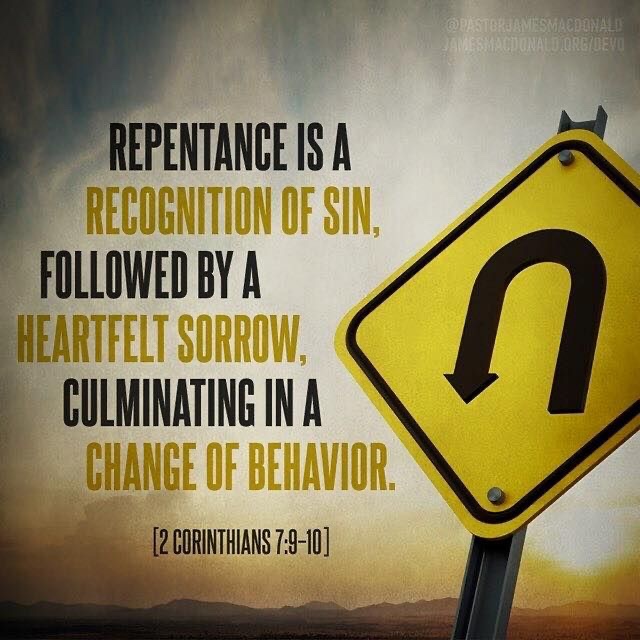
Godly Sorrow: The Distress that Drives us to God

Godly Sorrow: The Distress that Drives us to God

Godly sorrow brings repentance that leads to salvation and leaves no regret, but worldly sorrow brings death. [2 Corinthians 7:10]

I will never forget the year I outlawed the use of the word, “sorry” in my sixth-grade classroom. For some reason, the majority of my students thought that simply saying the word, “sorry” gave them a free pass from any consequence or any need to change their behavior. Saying, “sorry” was the magic word that would stop any authority figure from holding them accountable for their slip-ups and misdeeds and would relieve any feelings of badness and sadness they felt, especially when they were “sorry” about being caught. “Sorry” became the word that could hide them from judgment for breaking the rules, but their version of “sorry” had no power to change their hearts or help them recognize the wounds in relationships they were causing.

So, to move my precious charges from a position of self-centeredness and complete self-absorption, I outlawed the word “sorry” and gave them other phrases to use instead. All year we worked on empathy for others, so that saying, “I have hurt you,” and “This offense is my responsibility,” had a real impact on their hearts. We worked on forgiving and the giving of grace by saying to a classmate dealing with a misstep, “That’s okay, you are still a good person.”

I borrowed a page from the Apostle Paul’s second letter to the Corinthians as I asked God for help with this tough-hearted little crew He had given me to love. Paul’s first letter to the Corinthians had really scorched their hides, demanding accountability for the sin and divisions that had turned their church into a shipwreck. Then, worrying that he had been too harsh, Paul wrote in his second letter to them, that he wanted them to feel the Godly sorrow that would lead to real change.

He wanted them to recognize how truly destructive this current sin-cycle was to their relationship with God, with one another, and within themselves. He didn’t want them to concentrate on outward behavior, but on letting the grace of God and His love penetrate their hearts. Paul wanted the Corinthians to love well, the way Jesus loves, and that meant measuring their behavior by how well they were maintaining loving, healthy relationships. He didn’t want their lives defined by hiding, regret, or being driven away from God and each other by an angry, condemning conscience.

Paul’s Holy Spirit-inspired approach inspired me to help my students move from trying harder to be good and nice and less snarky, to training their hearts to value loving well. Instead of making vows to do better and throwing out a quick, “sorry,” we worked on creating a safe environment where behavior could be evaluated without threat and tools for true change could be discovered and used. I have to admit, that the more deeply we explored this approach, the more of my own “me-sickness” surfaced. God lovingly and gracefully dealt with me, the biggest sinner in that classroom!

What about you? Would you be interested in living a life that leaves no regret, a life defined by true change and healing? Do you want out of the living death of a continuous sin cycle? Embracing Godly sorrow, rather than worldly sorrow is the key. You and I can pray for God to help us turn our perspectives outward so that we have the big picture our sin and mess are creating. The distress we feel at getting caught can be changed to a distress that drives us to a loving Father who is ready to forgive, grant us a do-over, and over time, equip us to love better. We can pray for a more sensitive heart that cares deeplywhen we hurt God, hurt others, and hurt ourselves. That is Godly sorrow. What would it look like in your life?

BY: Stephanie Murillo

For Further Study
2 Corinthians 7: 8-10
2 Samuel 12:13
1 Kings 8:47-50
Matthew 21:32
Matthew 26:75
2 Timothy 2:25-26

Goodness Without Perfection

Goodness Without Perfection

And God said, “Let there be light,” and there was light. And God saw that the light was good. And God separated the light from the darkness. God called the light Day, and the darkness he called Night. And there was evening and there was morning, the first day. Genesis 1:3-5

How in the world do you separate light from darkness? Can you even imagine a time where they weren’t separate? Perhaps it was light for a moment and then dark the next, like a strobe light. Or was it foggy all the time in a half light half dark mix. However the two were muddled up, God was able to separate light from darkness.

BUT… God still knew the light was good before he straightened it out. This tells me something important about the character of God. Things doesn’t have to be perfect to be good. Which is a really hard concept for humans (like me) to understand.

  • You can be beautiful and a work in progress.
  • Don’t confuse a bad day for a bad life.
  • One bite of cake doesn’t ruin a healthy lifestyle.
  • Something can be awesome and need to change.

These are all inspirational thoughts we try to remember because human brains don’t like dichotomy. Nope. Not one bit. But you absolutely can have good kids who rip up library books, a good day in which you broke your foot or a loving spouse who can’t remember to bring you flowers on your birthday. It can be good before it’s perfect.

What is God trying to tell is right here in the very first thing he does? YOU don’t have to be perfect for God to love you. You don’t. God is okay with things that are good but mixed up. Thats why Jesus came. Is there work to be done? Sure, but that’s what life is for. So keep working on separating the light from the darkness in your life. Note to self: you are not God so it’ll probably take more than one day. But you don’t have to be perfect for God to love you.

P.S. Why did I include a picture of my littlest pup? No it wasn’t just clickbait. This little guy is amazing. He is good. He is just exactly who he should be… except… he loves to pee in the house. Oh he knows how to go outside. He is put out all the time. But he takes great delight in peeing in sneaky spots. Is this trait annoying? Do I wish he stopped. Of course. But he’s no less of a good dog who we love with all our hearts. I think God feels like this about us too.

Rebuild Trust

Rebuild Trust

Can trust be rebuilt? Trust has been lost over the last year in a host of ways. It is not hard to see systems break down in our society, career paths squashed, and relationships took a huge hit in our world. Families, friends and just about every one of our relationships were challenged in trust…including our relationship with God.

What happens when things are broken in a relationship? How do we rebuild?

Recently, I heard a Ted Talks on this topic and it talked about rebuilding trust taking three things: authenticity, logic and empathy. These three pieces need to be present when working on a broken relationship.

Authenticity: We really need to be authentic in our relationships or then it is not a real relationship. (Psalm 119:73-74)

Empathy: Empathy is required to have a mutual relationship. It is defined as the ability to understand and share the feelings of another. (Galatians 6:2-3)

Logic: This part of the triangle fascinated me! Logic is the form of communication necessary to have understanding. (I know this is where people throw their hands up and determine that rebuilding trust requires the other person to be logical…but both parties need understanding). She drew a simple triangle to explain logic. (Proverbs 3:5)

Start with the story? Many of us start with story and maybe, maybe get to the point sometime in the future. When there is no trust or empathy, then the story will probably fog up the logic and create confusion in understanding if we ever get to the point.

Start with the point? Most of us should start with the point so it is not lost in the story. When rebuilding trust, we may have an opportunity to share the story when trust is built by the point.       

This is an incredible formula that can be used in every relationship. Think about how you implement this in your life. When I am with people I trust, I tell them the whole story because the all details matter. When I am with someone I don’t trust, I usually get to the point pretty quick (and maybe I should more quickly). I usually try to tell people the story so they have empathy, but I’m learning it doesn’t work that way. Many times when I am telling a story and I see someone mentally check out…I should get to the point and wrap it up.

Hopefully you can take this formula into your life and put it to good use. While human relationships are hard, God does not need a formula. He loves you just the way you are, he is with you in your emotion, and he understands your story. Trust Him while rebuilding trust in other relationships.