How Jesus Viewed Women

How Jesus Viewed Women

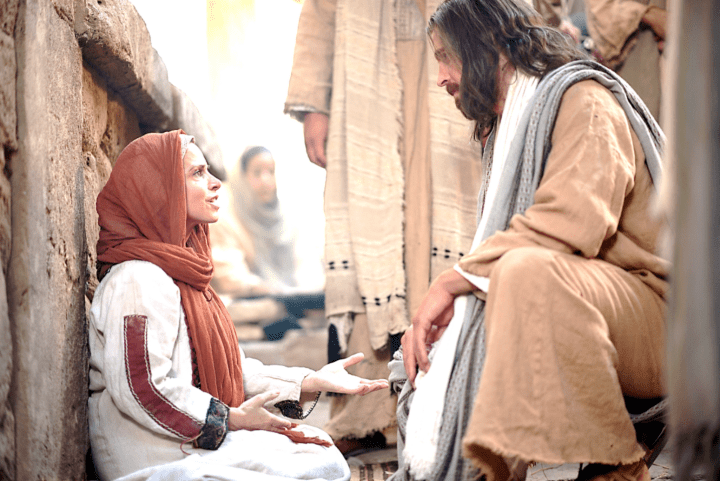
Have you ever been underestimated, dismissed or treated unfairly based on your gender?  Women in Jesus’ times often were forced to exist on the fringes of life, unnoticed little gray shadows, often blending into the background to escape abuse and persecution.  Most men in biblical times considered women as property, to be used and abused as they saw fit. Jewish men even had a morning prayer that thanked God they were not a woman. But Jesus perceivedwomen differently. He saw them as equal partners in the family of God, and He constantly challenged the cultural bias of that day. He wasn’t afraid to shine a spotlight on women, calling them out of the shadows to escort them to center-stage in His drama of redemption.

    While the Pharisees avoided women, Jesus associated freely with them, even using examples from women’s lives to illustrate and clarify what He was teaching. He compared God’s joy over a lost soul coming to faith to the joy of a woman finding a lost coin.  He taught of persistence in prayer by comparing it to a determined woman knocking on her neighbor’s door.  He compared heaven to yeast that a woman mixes into a large amount of flour until it works all through the dough. Jesus openly celebrated women who lived exemplary lives, gave graciously, believed boldly, and worshipped authentically.

Jesus related to women the same way he interacted with men, honestly, openly and directly.He washed away the boundaries that kept women out of the mainstream of religious life, inviting women to play leading roles in God’s redemptive plan. Sharon Jaynes, in her book, How Jesus Treated Women, points out the following examples of the way Jesus lifted up women and liberated them from an oppressive culture:

  • He touched the unclean woman with the flow of blood.
  • He taught the hungry female pupil in a room full of men.
  • He encourage Martha to join the classroom.
  • He befriended the sisters of Bethany.
  • He conversed with a thirsty Samaritan by the well.
  • He revealed His true identity to the five times divorcee.
  • He welcome the sinful woman’s worship.
  • He called the woman with the crippled back from the shadows.
  • He invited Mary Magdalene to join his ministry team.
  • He defended Mary of Bethanys gesture when anointing him with perfume.
  • He commended the Syrophenician mother’s faith.
  • He applauded the widows offering.
  • He commissioned Mary Magdalene to go and tell the disciples of his resurrection.
  • Jesus’ first word after the resurrection was “woman”.
  • Jesus was willing to risk his reputation to save the reputation of women.
  • Jesus freed women from their painful pasts and freed them to fulfill his purposeful plans.
  • He made no distinction between male or female married or single old or young; he simply related to people in regard to their relationship to God or lack of one.

Sharon Jaynes writes that Jesus gave women a voice that still speaks to us today.  We learn from the woman with the alabaster box that Jesus deserves our worship no matter what anyone else may think of us.  The woman at the well teaches us that no matter how crushed and broken our lives may be, Jesus can heal and renew us.  Mary of Bethany unpacks for us that no matter what others may expect from us, spending time with Jesus is the most valuable choice we can make.  Martha shows us that no matter our current tragedy, Jesus has the power over life and death.  Women recognized Jesus’ true identity when His inner circle did not, and women walked and sustained Jesus with their presence until the very end, despite the danger to their own lives.  

     You and I have a Savior who treated both men and women as individuals, with a firm kindness, deep respect, and focus on drawing out their faith.  While Jesus did not condemn the troubled women He encountered, He didn’t hesitate to point out that their sinful lives had to change.  No matter what Jesus diagnosed in the women who came to Him, He affirmed the value and dignity of every single one of them, often calling them, “daughter.”  He welcomed them and empowered them to find their true identity in Himself, the Christ.

    Jesus came to earth as a person who treated everyone, without exception, as a valued human being made in the image of God.  His measuring stick was not gender or status, but the quality of a person’s relationship with God.  Do you think you and I can do the same?  Can we look with the compassion of Jesus at the people in our lives who have been pushed into the shadows, and, like Jesus, invite them into the light of our love and acceptance?  Jesus saw the dignity and worth of women, giving them the power to deal with their issues of sin, repentance, and forgiveness. Might we do the same for anyone God brings into our lives?

Prayer:
Abba, my Daddy-God,

I have sometimes been hurt by people who did not see my worth and I have been guilty of doing this to others. Please forgive me. Thank You for treating women with such respect and love. Thank you for confronting our sin and mess without condemning us. Thank You for valuing us. Help me to find the dignity and worth in every person I meet. Please show me where I am biased, and please let Your love flow through me to those that the world has written off as undeserving of respect and care. Amen.

At the King’s Table

At the King’s Table

‘“Don’t be afraid,” David said to him (Mephilosheth), “for I will surely show you kindness for the sake of your father Jonathan. I will restore to you to all the land that belonged to your grandfather, Saul, and you will ways eat at my table.”’
{ 2 Samuel 9:7 NIV }

“You are those who have stood by me in my trials. And I confer on you a kingdom, just as my Father conferred one on me, so that you may eat and drink at my table in my kingdom.”
{Luke 22:28-30a NIV}

Do you like to be invited to dinner?  I sure do, especially when my host has taken time to prepare a lovely meal made to express a deep, loving connection with me.  How wonderful to enter a home, sit at a carefully set table, and spend a long, leisurely evening hearing one another’s hearts over a delicious feast and delectable dessert!  But what if that invitation to come and dine was totally unexpected, completely undeserved, and good for the entirety of one’s life?  That is the kind of offer that poor, lame, Mephibosheth received from King David, an invitation he could hardly believe was his.

    The book of 2 Samuel tells us that David had completely defeated Saul and had taken the throne at last.  In those times, victorious kings, in order to ensure a long reign, completely annihilated every relative and friend, servant and anyone elseconnected to their enemy who might pose a threat to their kingdom.  But David, being a type of Christ, had a completely different mindset.  He asked if there was anyone from Saul’s house to whom he could show kindness.  His advisors told him that Saul had a grandson named, Mephibosheth, who was lame in both feet. His nurse had dropped him when he was five years old while fleeing from the Philistines after his grandfather, Saul, and father, Jonathon, had fallen in battle (2 Samuel 4:4).

    Can you imagine the fear that coursed through Mephibosheth when he was taken from his bed and brought before the king?  Mephibosheth even called himself a “dead dog” wondering why the king even noticed him (2 Samuel 9:8).  Have you ever fallen so low that you have questioned whether God’s grace could truly be extended to you?  Are you able to put yourself in Mephibosheth’s place, poverty-stricken, defeated, crushed by the wheels of life, then blown away by an invitation to eat at the king’s table forever and have all that was lost restored? Can you imagine Mephibosheth’s joy at this unexpected deliverance from poverty and death? Pour yourself something hot and just process this for a while.

Jesus is still asking every single one of us to come and dine at His table. Like Mephibosheth, we are powerless, defeated and lame, because of that long-ago deadly choice made in the Garden of Eden. Yet, Jesus has lovingly, and carefully prepared a table for us, even in the presence of our enemies, a table groaning with the weight of His abundance, a table none of us deserve (Psalm 23). Every time we take communion, we get a little “foretaste of the feast to come,” that is waiting for us in heaven. Every time we spend time with Jesus, especially in the presence of our enemies, we can receive life-giving nourishment, the bread that “sustains the heart” (Psalm 104:15). But, like Mephibosheth, we have to admit that we are “dead dogs” needing God’s forgiveness and strength to make us “stand firm in Christ” (2 Corinthians 1:21) before we take our seat at the table of the King of Kings.

Got enemies? Got struggles? Resources used up? Come and dine at the King’s table! Open your Bible and ask God to feed you. Tell Him about your hunger and thirst. The door to His great dining hall is open to anyone willing to come in (Revelation 22:17). God Himself is the Master of the feast, a feast He has prepared Himself (Isaiah 25:6-8), Everyone is invited to this unending meal with the finest of meat and drink, carefully crafted for broken hearts and crushed spirits. Forgiveness is the first course, served only when we ask for it, followed by food that brings healing and growth, renewal and resilience to anyone willing to live in Jesus’ direction and pull up a chair at His table. Death and grief are banished from that heavenly meal and there is no seat for God’s enemies, so come and eat in peace; eat until you are full (Matthew 5:6). Why starve, eking out an existence on crumbs, when you and I are invited into God’s presence to be rehydrated and to eat of Jesus, the Bread of Heaven, the “finest of wheat” (Psalm 147:14)? Will you pull up a chair at the King’s table?

Prayer:
Abba, my Daddy-God, I thank You for inviting me to eat of You until I am satisfied. Forgive me for chasing after life’s junk food. You are my living water. You are my bread of life. Teach me how to come to You for what will fill me with life, hope, and radiant health. Thank You for giving me a seat at Your table. Amen.

The Tender Love of God

The Tender Love of God

13 Shout for joy, you heavens; rejoice, you earth; burst into song, you mountains! For the LORD comforts his people and will have compassion on his afflicted ones.
14 But Zion said, “The LORD has forsaken me, the Lord has forgotten me.”
15 “Can a mother forget the baby at her breast and have no compassion on the child she has borne? Though she may forget, I will not forget you!
16 See, I have engraved you on the palms of my hands; your walls are ever before me.
Isaiah 49:13-16 NIV

Have you ever experienced the tender, nurturing, abundant love of God? How would you describe this love? One of my most compelling encounters with the “mothering” side of God came when helping a member of our congregation plan a funeral for his estranged mother. I remember him asking those of us on staff to help him find the verse that mentioned mothers who forget their children, but God remembering anyway. Isaiah 49:15 became the theme of that funeral for a man who chose not to focus on his lost mother-love, but on the unending abundance of God’s way of loving him as only a perfect mother could.

I confess that God having a mothering part of His character was new and a bit uncomfortable for me at first. God as “Father” had been deeply ingrained in me from my Sunday school days onward. However, after chewing on this idea, praying and studying, I slowly came to the realization that God created motherhood, the need for mother love and the need for deep attachment in every single one of us, so why couldn’t He have this “mother” side? The Bible has some tender passages about this kind of nurturing love and this assurance of abundance that we were made to crave. Isaiah 66 overflows with God’s mother-comfort and invitation to deep attachment:

11 For you will nurse and be satisfied at her comforting breasts; you will drink deeply and delight in her overflowing abundance.”
12 For this is what the LORD says: “I will extend peace to her like a river, and the wealth of nations like a flooding stream; you will nurse and be carried on her arm and dandled on her knees.
13 As a mother comforts her child, so will I comfort you…..
Isaiah 66:11-13a NIV

    Every time I think of this kind of attachment, I think of my great-nephew, Caleb.  When he was an infant, I offered to hold him so his tired mother could eat some Christmas Eve dinner.  I sat in a chair by the fireplace and placed him on my chest with his little head tucked into my neck.  The fire was roaring and before long, its heat made us both sticky with sweat. When Caleb’s mama came to retrieve her baby, she had to literally peel him away from me for we were glued, skin to skin. What a powerful bond we shared!

     I am discovering that God is inviting us to this kind of attachment, an ongoing fountain of life that begins when we say “Yes!” to Jesus’ invitation to be in union with Him. This sustaining stream continues to flow into us every day of our lives.  All the joy, all the courage, all the creativity, and all the resilience we need comes from that attachment, but ceases without it.  So, do you think asking our Creator for the kind of mother-attachment we need might be an effective way to increase our connection to Him?  Do you think taking this need to any other place might not only be counter-productive but dangerous?  Might we pray about this?

Prayer

Abba, my Daddy-God, I need your mother-love.  I live with such a sense of scarcity in the world around me, that I need Your assurance of abundance.  I need a deep, constantly flowing, bonded love with You.  I give you all this need for mother-love, and I open the deep places of my heart to You. Forgive me for taking this need to any other source.  Comfort the fears that haunt me and nourish me, Your hungry child. Please show me the deep places in me that are not available to this kind of love. I need every blessing you want to give me. Thank You for engraving me on the palms of your hands. Thank You for staying aware of my need to be built up and protected. Amen!

https://www.youtube.com/watch?v=Sc6SSHuZvQE  (Reckless Love)

https://www.youtube.com/watch?v=BDURInx_GUk (It’s Always Been You)

Listening: Apology’s Missing Piece

Listening: Apology’s Missing Piece

Therefore, confess your sins to each other and pray for each other so that you may be healed. The prayer of a righteous person is powerful and effective.
[James 5:16 NIV]

The Sovereign LORD has given me a well-instructed tongue, to know the word that sustains the weary. He wakens me morning by morning, wakens my ear to listen like one being instructed.
[Isaiah 50:4 NIV]

     How would you rate your apology skills? Gary Chapman, the author of The Five Languages of Apology, believes that a good apology contains the following five elements:

  • I’m sorry.
  • I was wrong.
  • Please forgive me.
  • I’ll try not to do it again.
  • What can I do to make it right?

     I grew up with a close family member who could never say the words, “I’m sorry.”  Her strategy for dealing with those she offended was to withdraw, wait for the strong feelings to subside, then pick up the relationship as if nothing had ever happened. Because she was such a prominent person in my life, I subconsciously internalized some of her strategies. I didn’t have many apology tools in my toolbox, and I did not have a strong standing in the grace and forgiveness of God that could have broken down my fierce defensive approach to every relationship. Learning to say, “I’m sorry,” without the bottom dropping out of my world has been a long process.

     What I didn’t understand is that there is more than one way to feel sorry.  Sometimes feeling sorry focuses on getting relief from the pain of feeling our badness instead of prioritizing the restoration of relationship with God and those we have offended.  Some sorrow focuses only on trying harder with the same old strategies instead of training to work out the details of a healthy change.  Some sorrow focuses on an angry, condemning conscience instead of looking to the grace of Jesus Christ for forgiveness and a do-over.  Some sorrowful people, like my family member, hide from judgment from any source. Other sorrowful people are open to assessment from God, self and safe others because they have learned that this evaluation is based on God’s grace, mercy, and love.  One kind of sorrow seeks relief from guilt; this is worldly sorrow, which always ends in regret.  However, godly sorrow seeks true change, healed relationships, and a maturing life based on the principles Jesus brought to us.

     We can see godly sorrow and worldly sorrow play out in 1 Samuel 24:1-22.  David, hiding in the same cave where Saul goes to take a time-out, sneaks up on his king to cut off a piece of the hem of Saul’s robe.  But then David’s conscience begins to bother him and he recognizes that not only has he offended “the Lord’s anointed,” he has disobeyed God in the process (1 Samuel 24:6).  David has a godly sorrow that keeps his eyes on God and prevents him from harming the king (1 Samuel 24:8-15).  David, though he does not follow his men’s advice to kill his adversary, still embarrasses Saul but cutting off a piece of his garment.  He realizes God is not pleased and offers his king a heart-felt apology.  This is how godly sorrow works! Saul, on the other hand, maintains a relentless focus only on himself. He weeps sorrowful tears, but makes no changes to the course of his paranoid jealousy. King Saul’s worldly sorrow produces an endless cycle of broken relationships in his life, a life that is soaked in regret.

    Despite Saul’s tears and David’s remorse, both men have a missing piece in their interactions with one another. They do a lot of talking, but not much listening. What we say to each other when making an apology should only take up about ten percent of the conversation.  Listening to one another should take up the remaining ninety percent.  Why is this ratio so important?  If we do all the talking when apologizing, we can actually further wound someone we have already hurt.  King Saul could have asked, “How has my sin impacted you?” then started listening.  As he discovered David’s heart, he could have seen their disconnect through this young man’s eyes, rather than listening only to poke holes in David’s argument, find a quick fix, convince David to “get past it,” or stop any whining.  If both had listened to understand the hurt each had caused, apologized specifically for what they both heard from one another, then followed through with healthy changes, they could have taken significant steps toward reconciliation.

     Listening to understand is a hallmark of godly sorrow, a process that might take more than one session because we should never force a response from someone we have hurt.  Like other skills, listening with the intention of truly understanding and putting ourselves in the other person’s shoes, takes a great deal of practice, committed prayer, perhaps some counseling, and the energy and coaching of God’s Holy Spirit to see the process through to mastery. This sounds daunting, but take heart!  God has an ocean of grace in which to drown our defensiveness and despair at being the villain in someone else’s story.  Is this part of your life available to His grace?  Are you willing to ask God to make you a better listener and sharpen your apology skills?

Let’s pray.

Abba, my Daddy God,
Please help me to apologize effectively from my heart.  Show me where I have worldly sorrow instead of godly sorrow so that I can live free of these destructive patterns in my life.  Help me to be a better listener.  Open me up to Your loving grace for I need to come out of hiding to receive Your healing in this area of my life.  Thank You for not being mad at me about this because Jesus took my sin and shame and paid for it in my place on the cross.  Amen.

The Tender Love of God

The Tender Love of God

13 Shout for joy, you heavens; rejoice, you earth; burst into song, you mountains! For the LORD comforts his people and will have compassion on his afflicted ones. 14 But Zion said, “The LORD has forsaken me, the Lord has forgotten me.” 15 “Can a mother forget the baby at her breast and have no compassion on the child she has borne? Though she may forget, I will not forget you! 16 See, I have engraved you on the palms of my hands; your walls are ever before me.

[Isa 49:13-16 NIV]

      Have you ever experienced the tender, nurturing, abundant love of God? How would you describe this love?  One of my most compelling encounters with the “mothering” side of God came when helping a member of our congregation plan a funeral for his estranged mother.  I remember him asking those of us on staff to help him find the verse that mentioned mothers who forget their children, but God remembering anyway. Isaiah 49:15 became the theme of that funeral for a man who chose not to focus on his lost mother-love, but on the unending abundance of God’s way of loving him as only a perfect mother could.

     I confess that God having a mothering part of His character was new and a bit uncomfortable for me at first.  God as “Father” had been deeply ingrained in me from my Sunday school days onward.  However, after chewing on this idea, praying and studying, I slowly came to the realization that God created motherhood, the need for mother love and the need for deep attachment in every single one of us, so why couldn’t He have this “mother” side?  The Bible has some tender passages about this kind of nurturing love and this assurance of abundance that we were made to crave.  Isaiah 66 overflows with God’s mother-comfort and invitation to deep attachment:

 11 For you will nurse and be satisfied at her comforting breasts; you will drink deeply and delight in her overflowing abundance.”

12 For this is what the LORD says: “I will extend peace to her like a river, and the wealth of nations like a flooding stream;

you will nurse and be carried on her arm and dandled on her knees.

13 As a mother comforts her child, so will I comfort you…..

[Isaiah 66:11-13a NIV]

     Every time I think of this kind of attachment, I think of my great-nephew, Caleb.  When he was an infant, I offered to hold him so his tired mother could eat some Christmas Eve dinner.  I sat in a chair by the fireplace and placed him on my chest with his little head tucked into my neck.  The fire was roaring and before long, its heat made us both sticky with sweat. When Caleb’s mama came to retrieve her baby, she had to literally peel him away from me for we were glued, skin to skin. What a powerful bond we shared!

      I am discovering that God is inviting us to this kind of attachment, an ongoing fountain of life that begins when we say “Yes!” to Jesus’ invitation to be in union with Him. This sustaining stream continues to flow into us every day of our lives.  All the joy, all the courage, all the creativity, and all the resilience we need comes from that attachment, but ceases without it.  So, do you think asking our Creator for the kind of mother-attachment we need might be an effective way to increase our connection to Him?  Do you think taking this need to any other place might not only be counter-productive but dangerous?  Might we pray about this?

Prayer

Abba, my Daddy-God, I need your mother-love.  I live with such a sense of scarcity in the world around me, that I need Your assurance of abundance.  I need a deep, constantly flowing, bonded love with You.  I give you all this need for mother-love, and I open the deep places of my heart to You. Forgive me for taking this need to any other source.  Comfort the fears that haunt me and nourish me, Your hungry child. Please show me the deep places in me that are not available to this kind of love. I need every blessing you want to give me. Thank You for engraving me on the palms of your hands.  Thank You for staying aware of my need to be built up and protected. Amen!

https://www.youtube.com/watch?v=Sc6SSHuZvQE  (Reckless Love)

https://www.youtube.com/watch?v=BDURInx_GUk  (It’s Always Been You)

The Day Grace Came To Room #76

The Day Grace Came To Room #76

Have you ever thought you knew better than the person warning you that what you were contemplating would lead to big trouble? This struggle between flesh and God’s spirit within us is common to us all. I will never forget the day that this principle was lived out in technicolor in my sixth-grade classroom. New carpeting had been installed over the weekend and I had everyone swear an oath to do their best to not spill anything on it. The oath didn’t last long. One young lady offered to bring in cups of tempera paint from an art project out in the courtyard. I warned her to bring in only a few at a time, but rain was falling, so she tried to bring 26 cups in at once. She didn’t make it far before catching a toe on the leg of a desk, launching all those paint-filled cups into the air. I heard an audible gasp as paint fell on the children, on their desks, and on that beautiful new carpeting. Everyone looked at my poor helper and then at me in total silence, waiting for the doom they knew was coming.

     I sent up a quick prayer for self-control then found myself laughing and shaking my head at the mess.  I realized I had a very colorful teachable moment, so I put my arms around my hopelessly guilty helper and asked the class if they knew about “grace.”

     I explained to them that I was going to give grace to this speckled and dripping child standing before me, but that she did not deserve it.  I was not only going to forgive her, but I was also going to love her and help her to learn and grow for the rest of the year.  I was going to be in her corner, no matter what other challenges and struggles came her way.  Then I explained that everyone else was going to give her grace by not teasing her and by helping her scrub the carpet.  That day, my little helper gave me her heart.

     Despite our best efforts, a faint stain remained, so we named it “The Room 76 Memorial Stain.” I invited my students to visit it in the years to come and remember the day that grace came to our classroom.  They came and they laughed and they remembered!  My little helper, who received that grace, grew up to be a nurse in another city who then lovingly cared for a dear friend after surgery.  Grace given became grace shared.

     What about you?  Do you have some technicolor stains in your life?  Have you come to the place that you can only stand silent in speechless guilt because the evidence of a broken law is all around you?  Do you need God’s undeserved favor that covers so much more than just your need for forgiveness?  Do you need help to grow and to be transformed so that you are less likely to stumble in the future?  Then you are a candidate for God’s endless, unfathomable, unsearchable, ocean of grace.  

      God’s grace for you goes on an on, meeting your need for forgiveness, growth, fruit, obedience, victory, wisdom, relationship skills, problem-solving, and loving the way that Jesus loves.  Peter, soon discovered that he had a great deal to learn about grace, even after receiving it.  That is why he wrote in 2 Peter 3:18, “But grow in the grace and knowledge of the Lord Jesus Christ.”  He spent a lifetime discovering the many facets of grace, and we must do the same.

     What about you?  What parts of you are available to God’s grace?  Are the stains in your life a source of guilt or a testament to God’s desire to forgive you, grow you, teach you, and unleash you to do good in this hurting world? Because of the work of Jesus on the cross, God wants to meet you with love, not condemnation, a fact that can free you from guilt and shame if you believe Him.

Prayer

Abba, please show me the parts of my life that are not yet available to your grace. Show me where I am trying to clean myself up without You. Please give me grace to learn more about Your grace. Amen.

For Further Study:

John 1:14-17; Romans 3:24; 2 Corinthians 12:9; Galatians 2:21; 2 Timothy 1:9

Jesus Is The Glue

Jesus Is The Glue

We look at this Son and see the God who cannot be seen. We look at this Son and see God’s original purpose in everything created. For everything, absolutely everything, above and below, visible and invisible, rank after rank after rank of angels—everything got started in him and finds its purpose in him. He was there before any of it came into existence and holds it all together right up to this moment. And when it comes to the church, He organizes and holds it together, like a head does a body. [Colossians 1:15-18 The Message, emphasis added]

    How much time do you spend thinking about how to hold it all together?  How much effort? Think about your most troubling situation.  On a scale of 1-10, how would you measure your ability to trust that Jesus really is all sufficient to handle your struggle? 

    Paul made six compelling claims about Jesus in his letter to the Colossians that confront our deepest anxieties about how to tuck in all of life’s loose ends, all those places that feel exposed and vulnerable, all those parts of us that don’t seem to line up with who Scripture says we are in Christ.  

1. All things were created by Jesus and for Jesus, and He is the glue that holds creation together (Colossians 1:16,17).

2. Jesus was as human as any man, and as divine as God his Father, the fulness of God in bodily form (Colossians 1:19,20).

3. Every one of us can be made complete in Christ, if we are willing (Colossians 1:27-29).

4. All the treasures of wisdom and knowledge are hidden in Jesus, the Christ (Colossians 2:3).

5. All of creation is under the authority of Jesus (Colossians 1:15, 18; 2:10; 3:1).

6. Every single sin is forgiven as we live lives of faith in Jesus (Colossians 1:14, 20-23; 2:12-13; Romans 6; Ephesians 1:13-14)

Feeling unglued? Stop chasing those wild thought loops for a moment and look at Jesus. What do you see? Do you see a king already seated on the throne but still active in subduing his enemies (Hebrews 2:8)? Do you see a priest who paid for all of your sins with His precious blood, once and for all, yet is still freely offering His great salvation and willing to keep you in it (Hebrews 2:3)? Do you see a prophet who has shown you all you need to know, believe, and do, through whom the Holy Spirit still speaks when the Bible is read (Hebrews 3:7; 4:12)? Darlin’ you are looking at Jesus as “super-glue”! He has enough of what you need to cement you back together.

So, how should we, the unglued, respond to all this powerful sufficiency? We can begin by thanking God for being willing to put on our skin and showing us that He can not only begin any creative process, but finish it. He doesn’t leave us in pieces! We can ask God to show us His mind-blowing goodness and love, His hesed, so that we can learn to trust His agenda instead of ours. We can ask Him to clear away our misconceptions and expectations, so that we can give him all of ourselves, no parts exempt to His loving touch. We can ask Him to show us where He is rescuing us right now, and then watch for Him, listen to Him and express our gratitude to Him.

Prayer

Dear Abba, 

Help me trust that Your plans for me are good. Help me lean into the fact that You are truly strong enough, loving enough, and competent enough to glue my life back together and make me into a new “human 2.0”. Please touch the tender places in my heart and let me lean on You. I am so thankful that Your authority is over every part of my life. Amen.

1. https://www.rushpodcast.com/

Compassion from the Gut

Compassion from the Gut

“But when He saw the multitudes, He was moved with compassion on them, because they fainted, and were scattered abroad, as sheep having no shepherd” Matthew 9:36 KJV

Where in your body do you feel your strongest emotions? Temples? Back of the neck? Shoulders? Stomach? Where might your body register an overwhelming feeling of pity? The ancients believed that the seat of compassion and other strong emotions was the bowels. That may seem strange, but today’s scientists say that we have a nervous system in our digestive tractthat communicates with the brain, playing a key role in our overall health. Those “gut feelings” are real!

Perhaps the scholars who translated the New Testament into Greek accidentally explored a bit of this gut-brain connection when they wrote in Matthew 9:36 that Jesus was “moved with compassion.” Jesus was flooded with emotion when he saw masses of people who were “harassed and helpless, like sheep without a shepherd. The ancient Greek language did not have a word that expressed this gut-feeling of pity, a feeling that moved one to take action, so they coined one: “compassion.” When Jesus was “moved with compassion,” He experienced very deep emotions; His eyes gushed tears; and His heart was bursting with pity for the sufferers He saw before Him. The compassion He felt was visceral, a yearning He felt in every inch of His gut, a body-soul response to misery that moved Him to do something about what He saw.

Jesus has been compassionate from the very beginning. He was moved by compassion to take on a mission to reverse the terrible effects of the fall of man, before we even knew we needing saving. Compassion moved Him to enter the world humbly as a vulnerable infant, stooping low to bring heaven to us. Compassion moved Jesus to take our sicknesses and carry our sorrows (Isaiah 53:4). His compassion moved Him to restore sight to the blind (Matthew 20:31) and to heal the leper (Mark 1:41). Compassion for the demon-possessed man moved Jesus to cast out that evil spirit (Mark 5:19). Great pity moved Him to restore a dead son to life when He saw the terrible grief of the widow at the gates of Nain (Luke 7:13). Jesus took our punishment because He was moved by compassion for so many lost lambs (Isaiah 53:5). The compassion of Jesus is still here today. We have the Bible, giving us access to truth even if there is no teacher available. God still raises up men and women who are willing to share their faith-walk with others as they take compassionate action when they see a need. Perhaps the greatest compassion of Christ is that He has sent His Spirit to dwell with us right now, touching our hearts, and moving us to come to God’s throne of grace. We can come freely to ask for help and the energy to respond to the needs we see. In compassion Jesus has taught us to pray, and in compassion He has promised to meet our needs when we sin, when we fail, and when our enemies abuse us.

Jesus was moved by His compassion to take action; we are called to do the same. That is why Paul pleaded with the Philippians to let their own deeply-felt compassion result in unity, humility, service to others, and a life that could be a light to those still in darkness (Philippians 2:1-18). If you read theses verses in the King James Version, bowels get involved in verse one! Paul also urged the Colossians to clothe themselves with “tenderhearted (bowels of) mercy” as a love response to God (Colossians 3:12). When have you received the compassion of Jesus? Were you moved to some kind of response? When have you been “moved by compassion” to take some kind of helping action? Where might you need to respond now because God is asking you to pour out mercy from the deepest part of yourself?

Prayer: My Savior, I am so grateful for Your compassion towards me. You are a fountain of mercy that never runs dry. Help me to offer this same compassion to others with the same love that motivates You. Amen.

When Failure Is Learning

When Failure Is Learning

“O wretched man that I am! who shall deliver me from the body of this death? Thanks be to God who delivers me through Jesus Christ our Lord!” (Romans 7:24-25)

     Have you ever struggled with the fear of failure?  That fear was the slave-driver of every success I experienced until I was willing to make the same journey Paul writes about in the seventh and eighth chapters of Romans.  As mule-headed as I am, I have finally realized that failure is not fatal when I let God transform it into learning.

REGENERATED

     In the seventh chapter of Romans, Paul begins his new life with Christ as a man whose heart, will, and nature has been renewed.  Though he has been regenerated by the power of the Holy Spirit, he explains that he is still in a mighty battle with sin as a power within him even though the sin principle is no longer part of his new nature.  He is a believer who still sins, and so are we. He is a believer who still fails and so are we.

IMPOTENT

     Thank God that Paul doesn’t leave us stuck there!  In the course of Paul’s struggle and failure, God teaches Paul that he is utterly powerless, even with great willpower, to obey God’s law and to stay within God’s guardrails for his life.   When he writes, “I am sold as a slave to sin” (Romans 7:14), we see a man who has come to the end of himself.  But Paul’s failure to break himself free from an endless cycle of sin becomes a way for God to teach him that he needs the daily work of the Holy Spirit in his life.  We are so blessed that this man is so honest or we would have no answer for our own failures to be like Jesus.  How amazing that the answer lies in Paul feeling so awful about his failure to get over the bar!

WRETCHED

    At this point in the journey, Paul is wretched, absolutely devastated, and heartbroken.  His sin has hurt the God he loves, which feels intolerable to a man who spent his life wanting to serve the Lord he once thought he knew.  This is the bad news.  However, the good news is that Paul realizes that his only hope of deliverance is to admit how spiritually powerless he is and cry out for deliverance from “this body of death.”  If you have tried and tried then failed to deal with sin in your life, there is hope! Coming to the end of yourself opens the door to the powerful work of Christ’s spirit in you.

FILLED WITH THE SPIRIT

     When Paul finally connects the dots, he cries out, “Thanks be to God who delivers me through Jesus Christ our Lord!” (Romans 7:24). From writing I, me, and my over forty times in the seventh chapter of Romans, Paul now writes, in the eighth chapter that the Holy Spirit is the One who works in believers to give them the power of obedience, victory, and real holiness. 

     You and I can stay in a failure cycle or we can learn to work with the new will that God implants in us when we invite Jesus into our hearts.  Instead of trying to do better, we can train to rely on the empowering of the Holy Spirit from moment to moment.  We can go to church, read our Bibles, and pray, but we will be at the mercy of the demands of our flesh until we ask for and rely on a daily filling of God’s Holy Spirit.  Only then will we have the answer about who will deliver us from sin’s power over us. Only then will God transform failure into learning. Are you ready to let the Holy Spirit move you from groaning to grateful?

Prayer

Abba, I admit I cannot fix myself.  Teach me to ask for Your Spirit to fill me, moment to moment, so I can meet life’s challenges without relying on my own will, energy, and religious self-effort. Please show me where I went off the rails.  Holy Spirit, help me yield to you. Fill me with all that You are.  Amen.

Scripture For Further Study:

Ezekiel 11:19
Matthew 26:41
John 3:6
Romans 7 and 8
Galatians 3:3; 5:16; 6:8

When Life is in Pieces

When Life is in Pieces

 Have you ever needed a reset?  Have you ever needed to re-group?  Have you ever needed to pick up the pieces of your life?  Recently, after hearing a sermon about the feeding of the five thousand, I was reminded of a time when Luke 6:12 spoke directly to the pieces of my eighteen-year-old self.  

     Like many of my peers, graduating from high school, I mapped out what I thought was the perfect plan for my life.  I would go to Oral Roberts University, study pre-med, attend med school and serve the Lord with my skills as a physician.  That tidy plan was shattered into little pieces by my father’s cancer diagnosis, surgery, and the mounting medical bills that made it impossible to pay out-of-state tuition.  So, in the second semester of my freshman year, I sadly left ORU and transferred to Northern Arizona University. I needed to be closer to my parents and avoid those extra tuition costs.  Life just went downhill from there, or so it seemed.  My roommate had a drinking problem and then suffered a tubular pregnancy that nearly took her life.  She left in mid-semester to recover at home.  I no longer had to listen to her monologues when she was under the influence, but I was also very lonely.  I had not built the relationships the other students had because I had showed up on campus mid-year.  I hadn’t planned to be stuck at NAU, feeling isolated, and struggling with the anxiety that comes when a parent receives a terminal diagnosis.

    I also had not planned for God to show up the way he did early one Sunday morning in March.  I was reading the Bible about the feeding of the five thousand when Jesus’ final direction to the disciples seemed to leap off the page.

When they were all satisfied, Jesus said to his disciples, “Gather up the broken pieces that are left over, so that nothing is wasted.”
John 6:12 (NET)

     I took God at His word.  I wrote about all my broken pieces then offered my hastily scribbled paper up to the Lord.  I prayed, “Dear God, I am putting my broken pieces in Your basket.  Please multiply these broken bits into something useful.  I don’t want any part of this current experience wasted.  Here’s what is left of me, Father.  Please glue me back together.  Amen.”

Anxiety seemed to drain out of me, replaced by the first peace I had felt in a very long time.

My Abba was there with me in that dorm room.  I sat quietly just breathing in His peace.

   The moment my quiet time was over, the phone rang.  A kind and committed Christian guy I had met at ORU was driving through Flagstaff, returning to Tulsa after spring break.  He asked if he could stop by my dorm because his fiancé had just broken up with him.  She didn’t want to be a pastor’s wife and was devastated by the news that he wanted to go to seminary.  When he arrived, I shared the Scripture that God had given me that morning, and he, too, offered his own broken pieces to God.  That commons room at the dorm became a holy place as we prayed together.  God’s presence was palpable to both of us.  We invited God into our current struggle, offered Him our broken pieces, then simply sat there, basking in His presence, letting God carry our burden of hurt and anxiety.

    Hearing Pastor Matt’s sermon reminded me that the moment we recognize God’s presence, our current challenges fade from view and lose their power to define us.  God is right here, right now, even as we look at the pieces of our lives scattered around us.  He does not ask us to pretend they are not there.  He does not ask us to suppress our emotions about them.  He asks us to “gather the pieces that remain,” so that nothing about what has happened to us is wasted.  He enters into our struggle and says, in effect, “Daddy’s here.”

     What pieces do you need to gather?  How are you feeling about them right now? Invite your loving Daddy-God into your equation.  Name your pieces, pick them up, and offer them to God. Ask Him to multiply what is left of you.  Thank Him for not wasting an atom of your past, your present, and your future.  Sit quietly with Him and rest your weary head, trusting God not to forget or mislay a single part of who you are and what your heart needs.  Don’t worry about all those sherds and shards, because Jesus is the One who holds all of life’s bits together.

16 For in him all things were created: things in heaven and on earth, visible and invisible, whether thrones or powers or rulers or authorities; all things have been created through him and for him. 17 He is before all things, and in him all things hold together.
  [Col 1:16-17 NIV]

Prayer:

     Dear Abby, my Daddy-God, here is a list of my broken pieces.  I am giving them to you right now.  I don’t want to waste this experience, Father.  Teach me how to be “strong at the broken places.”  Glue me back together, Abba.  Multiply what is left of me so that I can take Your love and give it away to others who are dealing with their own broken pieces.  Amen.