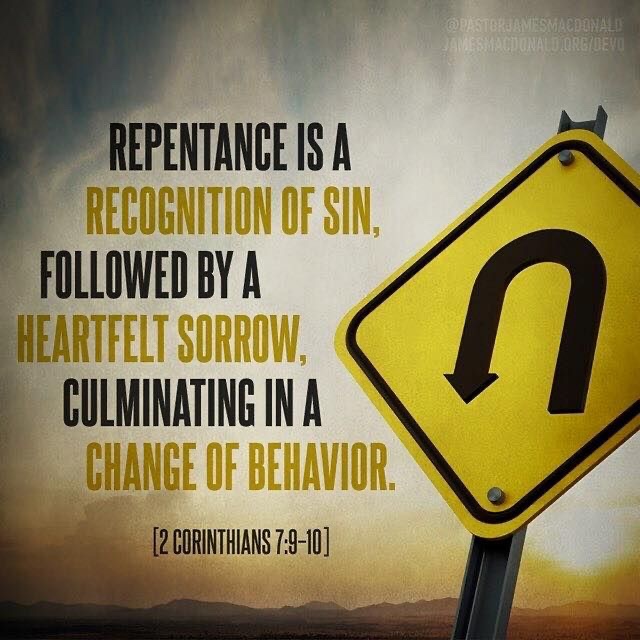
Godly sorrow brings repentance that leads to salvation and leaves no regret, but worldly sorrow brings death. [2 Corinthians 7:10]
I will never forget the year I outlawed the use of the word, “sorry” in my sixth-grade classroom. For some reason, the majority of my students thought that simply saying the word, “sorry” gave them a free pass from any consequence or any need to change their behavior. Saying, “sorry” was the magic word that would stop any authority figure from holding them accountable for their slip-ups and misdeeds and would relieve any feelings of badness and sadness they felt, especially when they were “sorry” about being caught. “Sorry” became the word that could hide them from judgment for breaking the rules, but their version of “sorry” had no power to change their hearts or help them recognize the wounds in relationships they were causing.
So, to move my precious charges from a position of self-centeredness and complete self-absorption, I outlawed the word “sorry” and gave them other phrases to use instead. All year we worked on empathy for others, so that saying, “I have hurt you,” and “This offense is my responsibility,” had a real impact on their hearts. We worked on forgiving and the giving of grace by saying to a classmate dealing with a misstep, “That’s okay, you are still a good person.”
I borrowed a page from the Apostle Paul’s second letter to the Corinthians as I asked God for help with this tough-hearted little crew He had given me to love. Paul’s first letter to the Corinthians had really scorched their hides, demanding accountability for the sin and divisions that had turned their church into a shipwreck. Then, worrying that he had been too harsh, Paul wrote in his second letter to them, that he wanted them to feel the Godly sorrow that would lead to real change.
He wanted them to recognize how truly destructive this current sin-cycle was to their relationship with God, with one another, and within themselves. He didn’t want them to concentrate on outward behavior, but on letting the grace of God and His love penetrate their hearts. Paul wanted the Corinthians to love well, the way Jesus loves, and that meant measuring their behavior by how well they were maintaining loving, healthy relationships. He didn’t want their lives defined by hiding, regret, or being driven away from God and each other by an angry, condemning conscience.
Paul’s Holy Spirit-inspired approach inspired me to help my students move from trying harder to be good and nice and less snarky, to training their hearts to value loving well. Instead of making vows to do better and throwing out a quick, “sorry,” we worked on creating a safe environment where behavior could be evaluated without threat and tools for true change could be discovered and used. I have to admit, that the more deeply we explored this approach, the more of my own “me-sickness” surfaced. God lovingly and gracefully dealt with me, the biggest sinner in that classroom!
What about you? Would you be interested in living a life that leaves no regret, a life defined by true change and healing? Do you want out of the living death of a continuous sin cycle? Embracing Godly sorrow, rather than worldly sorrow is the key. You and I can pray for God to help us turn our perspectives outward so that we have the big picture our sin and mess are creating. The distress we feel at getting caught can be changed to a distress that drives us to a loving Father who is ready to forgive, grant us a do-over, and over time, equip us to love better. We can pray for a more sensitive heart that cares deeplywhen we hurt God, hurt others, and hurt ourselves. That is Godly sorrow. What would it look like in your life?
BY: Stephanie Murillo
For Further Study
2 Corinthians 7: 8-10
2 Samuel 12:13
1 Kings 8:47-50
Matthew 21:32
Matthew 26:75
2 Timothy 2:25-26
 Grow Anyway
Love this Stephanie! Powerful example. Thanks, as always, for sharing and teaching. Praying this for my own life. 🙏🙌
LikeLike